Let’s Talk Increased Demand

Both Fire Risk and Calls for Service Are Increasing

Firefighters in full gear with hoses and tools standing near a fire truck in smoky conditions.

Preventing and responding to emergencies and wildfires is a top priority.

Increased Risk

The Marshall Fire defined the modern-day risk that communities are exposed to and the Arvada Fire Protection District needs to be prepared to respond to these incidents with adequate personnel and equipment.

  • Recent fires like Marshall, Lahaina, and the fires in Los Angeles have shown the effects of the climate on fire risk. Fires that start in the wildland urban interface can be quickly whipped by wind into conflagrations that threaten entire communities.
  • Once a wind-driven fire enters the built environment, it becomes an entirely new challenge. Modern water infrastructure is ill-equipped to handle the extreme demands necessary to fight multiple structure fires at once. Agencies that are equipped to fight structure fires and wildland fires face difficulty adapting practices to be effective in this type of effort. Agencies are attempting to learn from the challenges documented in these large fires and adopt practices and procedures that will help mitigate them in the future.
  • The District is working with its regional partners to adapt by hardening infrastructure, streamlining response coordination through shared communications systems and participating in regional training on multi-jurisdictional response and tactics specific to these events. These trainings are time and finance intensive as they involve multiple agencies.
Workers in safety vests paving a street with asphalt using heavy machinery on a sunny day.

Arvada Fire Protection District works hard to advocate for and adopt modern building and fire codes that serve to harden communities as they are being built.
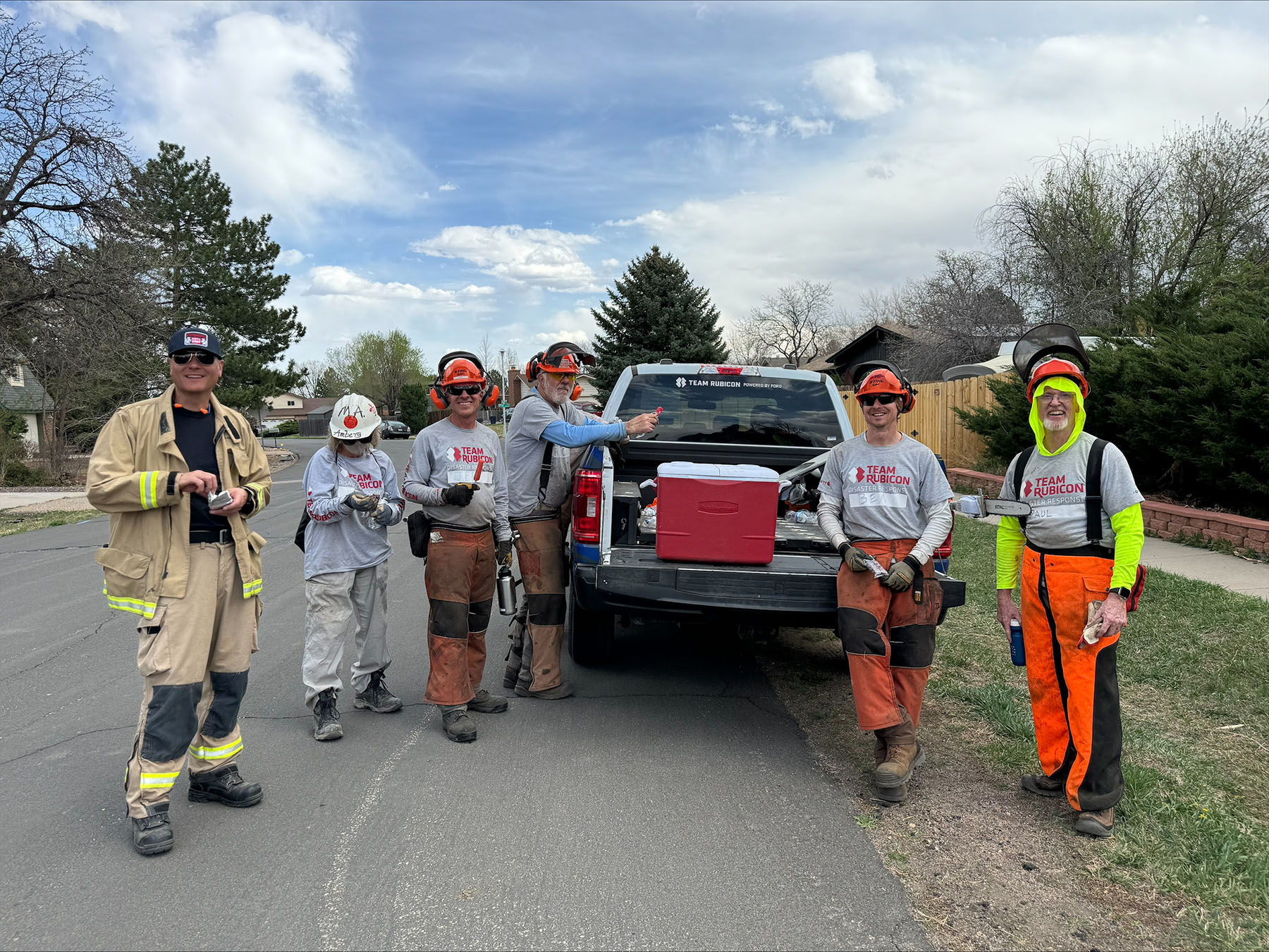
  • We are coordinating with community members and non-profits to conduct mitigation events.
  • We have a Wildland Mitigation Specialist employed in the Fire Marshal's Office.
  • We worked tirelessly with our jurisdictional partners over the course of multiple years to develop the Community Wildfire Protection Plan (CWPP).
Police officer in sunglasses and cap giving thumbs up next to a young boy sitting on a black Arapahoe sheriff motorcycle, both outdoors on a sunny day.

Increased Demand

Calls for service have increased significantly in the past 10 years. Arvada Fire ran 14,949 in 2016, increasing to 19,025 in 2025, 74% were emergency medical calls.
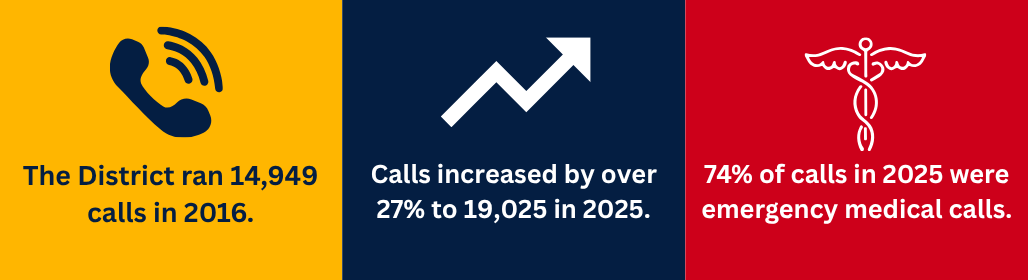
Infographic: 14,949 calls in 2016; calls up 27% to 19,025 in 2025; 74% were emergency medical calls.

Emergency response times are a top priority, additional revenues are needed to ensure we have the personnel and equipment to respond.

To meet demand the new revenue would help fund:

  • Firefighter and paramedic staffing levels to safely and efficiently respond to emergencies.
  • Wildfire mitigation efforts and community education.
  • Recruiting and retaining firefighters and paramedics.
  • Emergency vehicles and equipment, and modernize facilities to better protect the public and first responders.
  • Improving firefighter health and wellness programs such as early detection and treatment for cardiovascular conditions and cancer; mental health support; and mandatory fitness training and standards.

Learn more on our Funding page and Services page.